
Introduction
Every public-facing API eventually becomes a target for automated discovery. It does not require a company to be large, famous, or handling sensitive data. Once a service is reachable from the internet, automated systems begin testing common weaknesses.
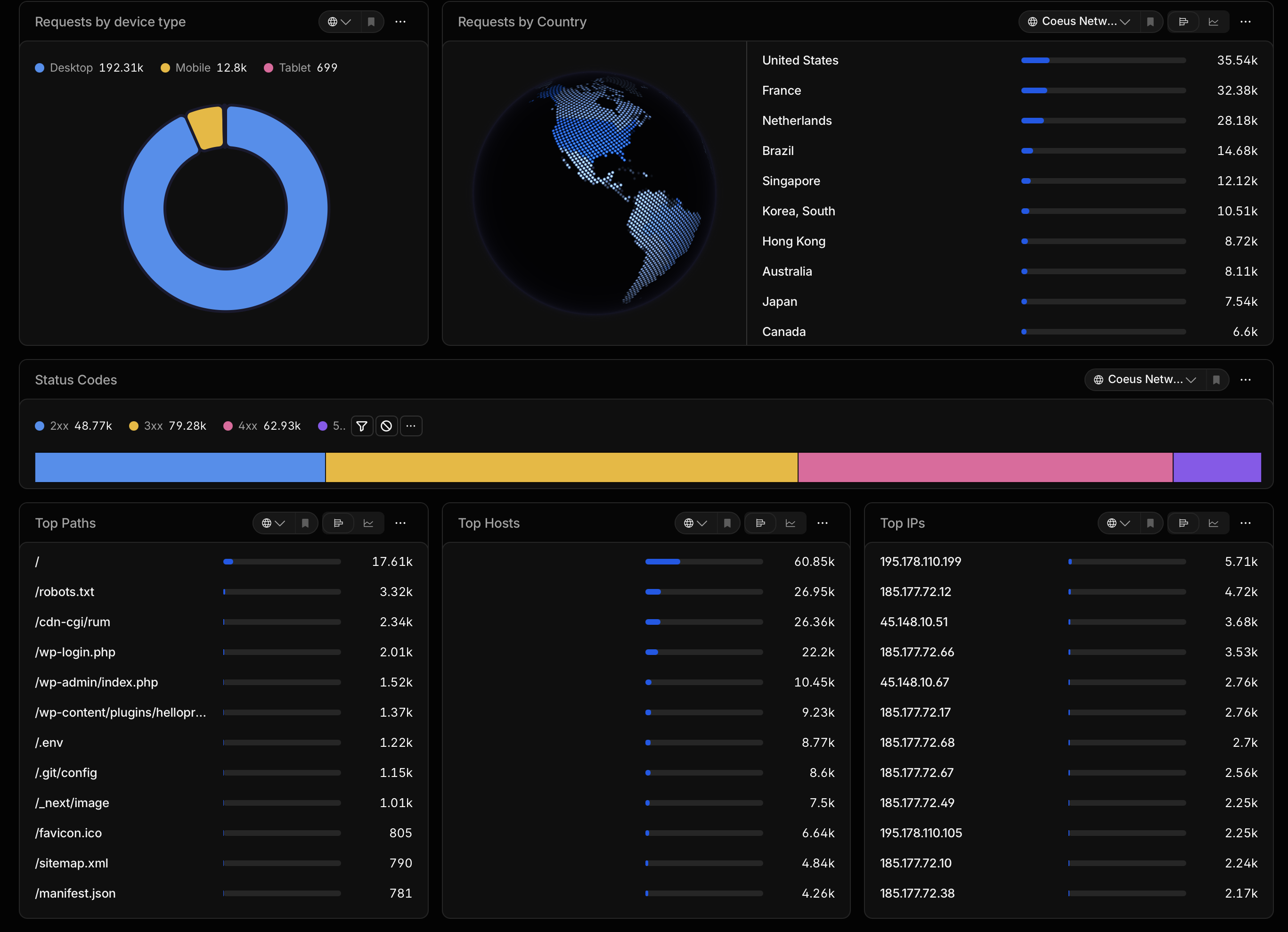
A review of API server request patterns reveals a familiar cybersecurity reality: attackers and automated scanners continuously search for exposed credentials, configuration files, outdated components, and application secrets.
These requests do not automatically indicate a breach. Instead, they represent reconnaissance activity designed to identify systems where security controls may have failed.
The Difference Between Scanning and Compromise
Modern applications receive thousands of automated requests attempting to locate common files and vulnerable endpoints.
The important security question is not:
"Did someone attempt to access the system?"
The important question is:
"Did the attempt reveal information, authenticate successfully, or gain access?"
A request for a sensitive file returning a blocked response is fundamentally different from a request successfully retrieving credentials.
1. Searching for Environment Files and Secrets
One of the most common patterns observed is automated discovery of environment files:
        /.env.production
        /main/.env
        /config/.env
        /app/.env.local
        /BACK/.env
        /APP/.env
        /.env.sendgrid.prod
        /.env.sendgrid.secret
Environment files are frequently targeted because developers sometimes store sensitive configuration values inside them.
Potentially exposed information can include:
- API keys
- Database credentials
- Cloud access credentials
- Email service credentials
- Authentication secrets
Proper secret management requires that sensitive configuration never be publicly accessible and that credentials are rotated regularly.
2. Email Service Credential Discovery
Automated scanners also frequently search for email provider configuration files:
        /sendgrid-config.php
        /mandrill-config.php
        /mailjet-config.php
        /sendgrid_settings.py
        /smtp_credentials.json
        /postmark.yml
Email infrastructure is an attractive target because compromised credentials can be abused for:
- Spam campaigns
- Phishing attempts
- Password reset abuse
- Reputation damage
Strong access controls, encrypted storage, and credential rotation reduce the impact of attempted credential discovery.
3. Cloud Infrastructure Discovery
As organizations adopt cloud platforms and infrastructure-as-code, attackers have expanded their discovery techniques.
Observed requests included searches for:
        /config/aws.json
        /lambda_config.json
        /application.yaml
        /appsettings.Development.json
These files may contain information about:
- Cloud architecture
- Deployment environments
- Application settings
- Service credentials
Cloud security requires protecting both the application and the supporting infrastructure configuration.
4. Payment Credential Probing
Automated systems also search for payment-related configuration:
        /stripe.env
        /stripe/config.json
Payment credentials must be isolated, restricted by permission, and regularly rotated.
Least privilege access ensures that even if a credential is exposed, the potential damage is limited.
5. Legacy Application and Malware Discovery
Another category of requests targets known vulnerable application paths:
        /wp-content/wp.php
        /uploads/94056-upload.phtml
        /vendor/phpunit/phpunit/src/Util/PHP/ask.php
        /admin/phpinfo.php
These requests are associated with attempts to identify:
- Old vulnerable components
- Unauthorized file uploads
- Web shells
- Debug information exposure
Removing unused components and preventing unnecessary execution paths reduces exposure.
Defense Through Layered Security Controls
Protecting an API requires multiple security layers working together.
- API Keys: Authenticate requests and services.
- Encryption in Transit: Protects communication between systems.
- Encryption at Rest: Protects stored information.
- PQC PKI: Provides a future-oriented approach to cryptographic identity.
- Session Management: Controls authenticated user sessions.
- RBAC: Limits actions based on authorization level.
- Logging: Provides visibility into requests, failures, and attack patterns.
- Key Rotation: Reduces the lifetime and usefulness of compromised credentials.
Detection Matters More Than Blocking Alone
Blocking individual requests is useful, but modern security requires understanding attacker behavior.
A scanner may perform:
        Discovery
            ↓
        Credential probing
            ↓
        Authentication attempts
            ↓
        Privilege attempts
            ↓
        Data access attempts
Security systems should correlate these actions and identify when harmless reconnaissance becomes active exploitation.
Conclusion
Public APIs will always receive unwanted attention. Automated scanning is a normal part of operating internet-facing services.
The goal of cybersecurity is not to prevent every request from arriving. The goal is ensuring that sensitive information remains protected, access is controlled, credentials are continuously managed, and suspicious behavior is visible.
A secure API is not one that is never tested by attackers. It is one that can withstand testing, detect abnormal behavior, and respond before reconnaissance becomes compromise.